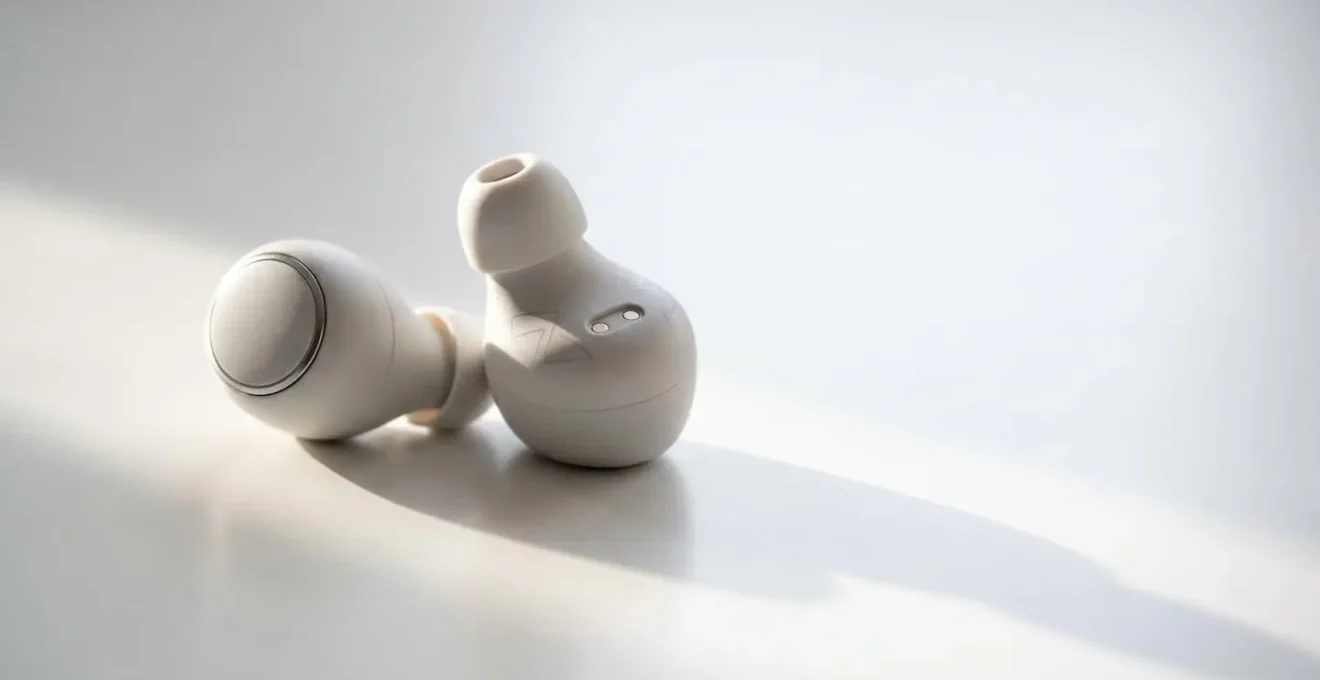
Your TWS earbuds’ short lifespan isn’t a defect; it’s an unavoidable outcome of their core design and the laws of battery chemistry.
- Tiny lithium-ion cells are highly susceptible to “calendar aging,” a chemical degradation process accelerated by being constantly held at 100% charge inside their case.
- Their sealed, non-repairable construction makes battery swaps nearly impossible for most models, turning a depleted battery into a dead product.
Recommendation: To marginally extend their life, focus on managing heat, adopting smarter charging habits, and prioritizing repairability in your next purchase.
It’s a frustratingly common story for any owner of True Wireless Stereo (TWS) earbuds, from AirPods to Galaxy Buds. You spend a significant amount of money on a piece of premium audio technology, and for the first 18 months, it’s flawless. Then, almost like clockwork, the battery life begins to plummet. First, the right earbud dies in 45 minutes. Then the left. Soon, you’re lucky to get through a single album. The common advice is to clean them, perform a factory reset, or just accept that “all batteries degrade.” But this doesn’t explain the sheer speed and inevitability of their demise.
The truth is more complex and, from a chemical standpoint, more final. The problem isn’t necessarily a flaw in your specific device; it’s a fundamental conflict between the design goals of TWS earbuds—miniaturization, convenience, and constant readiness—and the physical limitations of the lithium-ion batteries that power them. The very features that make them so appealing are also the agents of their accelerated destruction. This isn’t about a conspiracy of planned obsolescence, but rather a series of design trade-offs where longevity was sacrificed for user experience.
This article will not offer a magic fix. Instead, it will act as a battery expert’s post-mortem. We will dissect the chemical and physical reasons for this rapid degradation, from the stress of a full charge to the damage caused by heat. We will explore practical maintenance, compare the philosophy of repairable versus disposable designs, and provide realistic strategies to slightly prolong the inevitable. Ultimately, you will understand that the two-year lifespan isn’t an accident, but an engineered reality.
To fully grasp the factors at play, this guide breaks down the core issues, from the chemistry of the battery itself to the economic realities of repair and replacement. Explore the sections below to understand the complete picture of your earbuds’ lifecycle.
Summary: The Inevitable Decline of TWS Earbud Batteries
- Why Does a 40mAh Battery Lose Capacity So Quickly?
- How to Clean Earwax From Contacts to Fix Charging Issues?
- The Storage Mistake That Kills Lithium Cells in Weeks
- Fairbuds or AirPods: Is Repairability Worth the Bulk?
- How to Charge Your Case Less Often to Save Battery Cycles?
- Why Does Leaving Your Phone on the Dashboard Destroy the Battery?
- The Harsh Economics of Refurbishing Sealed Earbuds
- Repair, Refurbish, or Replace: What Is the Planet-Friendly Choice?
Why Does a 40mAh Battery Lose Capacity So Quickly?
The battery inside your earbud, often a minuscule 40mAh cell, is subject to two primary forms of degradation: cycle aging and calendar aging. Cycle aging is straightforward; it’s the wear and tear from charging and discharging. Most lithium-ion batteries experience a 12.4% to 24.1% capacity loss after 500 cycles. If you use and recharge your earbuds daily, you can reach this threshold in under two years. However, the more aggressive culprit for TWS earbuds is calendar aging—the degradation that occurs simply because the battery exists, regardless of use. This process is massively accelerated by two factors: heat and, most critically, a high state of charge (SOC).
Your earbud case is designed for convenience, keeping the buds topped up to 100% at all times. While this ensures they’re always ready, it’s chemically disastrous. Keeping a lithium-ion battery at 100% SOC puts immense stress on its internal components, accelerating parasitic reactions that permanently consume the lithium ions needed to hold a charge. Research on this phenomenon is clear: a study on similar battery cells found that even at a mild 25°C, a battery stored at 100% SOC loses 6.4% of its capacity in just 10 months from calendar aging alone. The tiny size of an earbud battery means this percentage loss has a dramatic impact on runtime.
This constant “storage” at 100% inside the case creates a perfect storm. Unlike your phone, which you might let drop to 30% before recharging, your earbuds are forced into the most stressful chemical state possible every time you put them away. This guaranteed high-SOC environment is the primary reason their small batteries degrade at a much faster rate than larger devices.
How to Clean Earwax From Contacts to Fix Charging Issues?
While chemical degradation is the primary killer of earbud batteries, physical obstruction is a common accomplice that can mimic or accelerate the symptoms. If an earbud isn’t making a solid connection with the charging pins in the case, it may not charge correctly, leading you to believe the battery is dead when the issue is merely a poor connection. The main culprits are earwax, skin oils, and debris that build up on the earbud’s charging contacts.
Over time, this grime can form an insulating layer, preventing the flow of electricity. In some cases, the combination of moisture from sweat and the electrical current can cause corrosion on the metal contacts, further hindering the charging process. This is why you might find one earbud consistently charged while the other is dead, even though they were both in the case. A simple and regular cleaning routine can often resolve these charging failures and rule out physical issues before assuming the battery is at fault.
The image above shows the intricate metallic surface of charging pogo pins. Any contamination on this surface can disrupt the charging cycle. Maintaining these contact points is a crucial, practical step in ensuring your earbuds receive a consistent charge and that you are accurately assessing their battery health. Neglecting this simple maintenance can lead to incorrect diagnoses of battery failure.
Action Plan: Safely Clean Your Earbud Contacts
- Gently clean the rubber or plastic portions of the earbuds using a soft, slightly moist towel to remove surface debris.
- Use a dry toothpick to carefully scrape any visible, hardened wax from the interior mesh and the recessed areas around the charging contacts.
- For stubborn grime on the metal contacts, lightly dampen a cotton swab with 70% isopropyl alcohol and gently rub the contacts to dissolve oils and remove any early-stage oxidation.
- Ensure the earbuds are completely dry before placing them back into the charging case to prevent any moisture-related damage.
- Perform this contact cleaning on a monthly basis to prevent the majority of connection and charging failures.
The Storage Mistake That Kills Lithium Cells in Weeks
If you plan to store your earbuds for an extended period—perhaps you have a backup pair or won’t be using them for a few months—the worst thing you can do is leave them fully charged or completely dead. As discussed, a high state of charge (SOC) accelerates calendar aging. Storing them at 100% is a recipe for rapid capacity loss. Conversely, storing them at 0% is even more dangerous. A deeply discharged lithium-ion battery can enter a state where its internal protection circuit is tripped, potentially making it impossible to recharge ever again.
The ideal storage condition for lithium-ion batteries is a partial charge. As one technical group, Batterywali Technical Research, states in their analysis of battery life:
Lithium ion and Nickel based batteries need to be stored at 40% of their full SOC.
– Batterywali Technical Research, Calendar life VS Cycle life analysis
This 40-50% SOC range minimizes chemical stress on the battery’s components. Furthermore, storage temperature is just as critical. Storing a fully charged device in a hot environment, like a car’s glove box in summer, is the fastest way to permanently destroy its capacity. Comprehensive research on long-term storage degradation shows the dramatic impact of these combined factors. For instance, a battery stored at 55°C with a 90% SOC can suffer a 22.86% loss in conductivity after 36 months, while one stored at a cool 25°C and 10% SOC loses only 2.5%. For tiny earbud batteries, the damage is proportionally much greater and occurs far more quickly.
Fairbuds or AirPods: Is Repairability Worth the Bulk?
The rapid degradation of TWS earbud batteries has given rise to a philosophical divide in product design: disposability versus repairability. On one end of the spectrum are products like Apple’s AirPods, which are engineered for seamlessness and compactness. They are glued and sealed, making battery replacement a task for only the most skilled and patient technicians. Consequently, a dead battery effectively means a dead product. This design approach has earned them a 0/10 repairability score from iFixit, a leading advocate for the right to repair.
On the other end are products like Fairbuds. They are explicitly designed to be taken apart. The battery in both the earbud and the case is easily accessible and replaceable with basic tools. This commitment to longevity and sustainability earned them an unprecedented 10/10 from iFixit. However, this repairability comes at a cost: bulk. The modular design requires more space, making Fairbuds noticeably larger and less sleek than their sealed counterparts. The choice for the consumer becomes a direct trade-off between a compact, disposable design and a bulkier, sustainable one. This difference is starkly reflected in the long-term cost of ownership.
An analysis of the total cost over five years, factoring in battery replacements, reveals the financial implications of this design choice.
| Cost Factor | Fairbuds | AirPods Pro |
|---|---|---|
| Initial Purchase | $149 | $249 |
| Year 2 Battery Replacement | $4.99 per earbud ($10 total) | Full replacement needed ($249) |
| Year 4 Battery Replacement | $4.99 per earbud ($10 total) | N/A (already replaced) |
| Charging Case Battery (Year 3) | $23.50 | Included in replacement |
| 5-Year Total Cost | $192.50 | $498 |
| Cost Savings | $305.50 (61% reduction) | |
The financial argument for repairability is compelling. While the upfront cost is lower, the true value emerges over time, saving the user from having to repurchase the entire product when a single, inexpensive component fails. This highlights a critical question for consumers about what they value more: sleek design or long-term sustainability and cost savings.
How to Charge Your Case Less Often to Save Battery Cycles?
While you can’t stop the chemical aging of the earbud batteries themselves (as the case will always charge them to 100%), you can control the aging of the battery inside the charging case. The case’s battery is subject to the same laws of physics. By reducing the number of times you charge the case, and by managing how you charge it, you can extend its lifespan, and by extension, the useful life of the entire system. The goal is to minimize both cycle count and chemical stress.
One of the most effective strategies is to avoid the extremes of 0% and 100%. Instead of plugging the case in every night, try to keep its charge level within a healthier range. As factory-tested data demonstrates, maintaining a 30%-80% charging range can significantly reduce stress on the lithium cells, potentially doubling the battery’s overall lifespan. This simple habit has a profound impact on long-term health. Another key factor is charging speed and heat. Using slower, low-wattage chargers (like an old 5V/1A phone charger) generates less heat than high-speed USB-C PD chargers, which helps preserve the battery’s internal structure.
Furthermore, you can reduce how often you need to charge the case by minimizing the power drain from the earbuds themselves. Features like Active Noise Cancellation (ANC) are major power consumers, and turning them off when not needed can reduce drain by 20-40%. Similarly, disabling features like precision finding or constant Bluetooth readiness when the case is in storage can help conserve its charge. Avoiding wireless charging when possible is also advisable, as it is less efficient and generates more waste heat than a wired connection, contributing to faster degradation.
Why Does Leaving Your Phone on the Dashboard Destroy the Battery?
The principle of thermal degradation is universal for all lithium-ion batteries, whether they’re in a phone, a laptop, or your TWS earbuds. Leaving a device on a car’s dashboard on a sunny day is one of the most destructive things you can do to its battery. The interior of a car can quickly reach temperatures exceeding 60°C (140°F), creating a hostile environment for battery chemistry. At these elevated temperatures, the parasitic chemical reactions that degrade the battery’s capacity accelerate exponentially. The delicate structures within the battery, like the separator and electrode materials, can be permanently damaged.
This isn’t a minor effect. Real-world temperature impact studies confirm that batteries operated or stored at 45°C can experience more than double the degradation rate compared to those kept at a room temperature of 25°C. For your TWS earbuds, this danger is just as present. Leaving the charging case in a hot car, a gym bag in the sun, or even just in your pocket during vigorous exercise can raise its internal temperature enough to cause lasting damage. Heat is the enemy of longevity.
As the image suggests, even indirect, ambient heat can create a damaging environment. The sleek, often black plastic used for charging cases is effective at absorbing thermal energy, turning the case into a miniature oven for the batteries inside both the case and the earbuds it holds. This environmental factor is often overlooked but plays a significant role in the premature death of your devices. Protecting your earbuds from extreme heat is as crucial as managing their charge cycles.
The Harsh Economics of Refurbishing Sealed Earbuds
With battery degradation causing an estimated 68% of early failures in wireless earbuds, the market for used or refurbished units seems like a logical, sustainable alternative. However, the economics are far from simple, especially for the sealed designs that dominate the market. While buying a refurbished product is theoretically better than buying new, the process of making a used earbud “like new” is fraught with challenges that make it a marginal business at best.
The core issue is accessing and replacing the tiny, glued-in battery. For an individual, this is a nearly impossible task without specialized tools and a high risk of destroying the earbud’s plastic shell. For professional refurbishers, it’s a question of labor cost versus product value. The process is time-consuming and requires technical skill, which often makes the cost of a professional battery replacement service higher than simply buying a new pair of budget earbuds.
Case Study: The Viability of TWS Refurbishment
A 2024 case study from a TWS manufacturer illustrates this economic challenge. A buyer sent 500 defective units for evaluation. The factory determined that replacing the battery would cost $4.50 per unit plus shipping, bringing the total refurbishment cost to roughly $750. Coincidentally, the cost to simply recycle the materials was also $750. The buyer chose battery replacement, demonstrating that professional refurbishment is technically feasible, but only economically viable at a large scale. For individual consumers, with retail parts costing $8-12 per pair and the risk of damaging the glue-sealed casing, DIY repair remains largely impractical.
This reality means that most “refurbished” TWS earbuds on the market are likely just returned units that have been cleaned and tested, but still contain the original, partially degraded battery. Unless the refurbisher explicitly states that the battery has been replaced—a rare and costly service—you are likely buying a product that is already partway through its limited chemical lifespan.
Key Takeaways
- The primary cause of TWS earbud death is “calendar aging,” where the battery degrades just by being held at 100% charge in its case.
- Heat is a major accelerator of battery degradation; avoid leaving your case in hot environments like a car dashboard.
- While cleaning contacts can solve charging issues, the sealed design of most earbuds makes battery replacement nearly impossible for the average consumer.
Repair, Refurbish, or Replace: What Is the Planet-Friendly Choice?
We are left at a crossroads. The technological marvel of TWS earbuds is shadowed by the reality of their short, disposable lifespan. The fundamental chemistry of their tiny batteries, combined with design choices that prioritize sleekness over serviceability, creates a product that is almost destined for the landfill within a few years. So, what is the most responsible path forward for a consumer who values both good audio and a healthier planet?
The answer is not straightforward and involves a series of conscious trade-offs. The most sustainable option is to purchase a product designed for repairability from the outset, like the Fairbuds. This choice may mean accepting a bulkier design, but it grants you the power to replace a simple, inexpensive battery instead of the entire device. It is a vote with your wallet for a more circular economy.
If you are committed to a sealed design, the next best option is to maximize the lifespan of what you own. This means diligently applying the principles of battery care: avoiding thermal extremes, using slower chargers for the case, and not letting it sit on the charger indefinitely. When it finally dies, seeking out a professional battery replacement service—if one even exists and is economically viable for your model—is preferable to immediate replacement. Buying refurbished is a well-intentioned but risky choice unless you can verify a battery replacement has occurred. Without that guarantee, you are simply inheriting a product with a partially expired lifespan.
Armed with this knowledge of battery chemistry and design trade-offs, you can now make a more informed choice for your next pair of earbuds, balancing the allure of convenience against the practical need for longevity and sustainability.