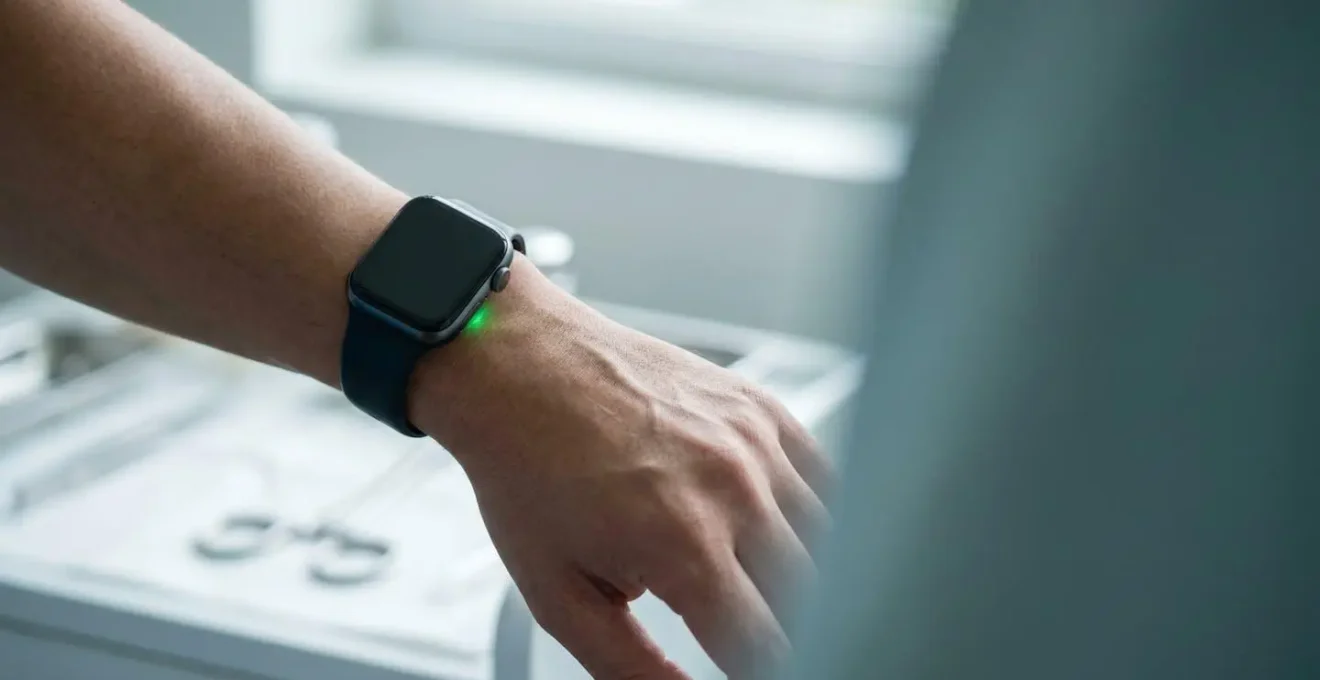
The heart rate data from your smartwatch is not inherently “good” or “bad”; its medical utility depends entirely on understanding its limitations and the context in which it was recorded.
- Wrist-based sensors are susceptible to errors from movement (cadence lock), skin properties (tattoos), and high-intensity exercise.
- Your most valuable and reliable metric is your true Resting Heart Rate (RHR), measured under specific, controlled conditions.
Recommendation: Instead of presenting raw data to your doctor, learn to identify and share context-rich insights (e.g., a consistent upward RHR trend) to start a more productive, data-informed conversation about your health.
You glance at your wrist. A neat little graph shows your heart rate over the past 24 hours. There’s a spike here, a dip there. As someone managing a health condition, this data feels important, a continuous story about your body. The natural next step seems obvious: show it to your doctor. Yet, you might be met with a skeptical look. The common advice is that smartwatches aren’t medical devices and the data is unreliable. While true, this binary view—trustworthy vs. useless—misses the point entirely.
The problem isn’t the data itself, but our understanding of it. We treat the number on the screen as a pure physiological signal when it’s often a messy combination of signal and noise. The key to unlocking the value of your smartwatch data isn’t to blindly trust it, but to become an expert in its failures. It’s about learning to identify the specific situations where the technology is most likely to be wrong, so you can have greater confidence in the moments it’s right.
This guide moves beyond the simple “is it accurate?” question. We will deconstruct the common failure points of wrist-based heart rate monitors—from the physics of light absorption in skin to the motion artifacts that plague your workouts. By understanding *why* your watch gets it wrong, you’ll learn how to collect data that is genuinely useful for you and for having a more meaningful conversation with your healthcare provider. We’ll explore how to capture a truly reliable resting heart rate, the real risks and benefits of sharing data with third parties like insurers, and how to filter the noise to find the signal that matters.
To navigate this complex topic, this article is structured to help you build your understanding layer by layer. Below is a summary of the key areas we will cover, each designed to empower you to become a more critical interpreter of your own health data.
Summary : A Critical Guide to Interpreting Your Smartwatch Heart Rate
- Why Does Your Watch Fail to Read Your Pulse Through a Tattoo?
- How to Wear Your Strap to Prevent “Cadence Lock” Errors?
- The Stress Cycle: When Your Watch Falsely Says Your Heart Is Racing
- Chest Strap or Wrist Watch: Which Should You Use for HIIT?
- When Is the Best Time to Measure Your True Resting Heart Rate?
- Why Is Your Daily Walk Worth Money to Your Insurance Company?
- The “Eardrum Suck” Feeling: Why ANC Makes You Nauseous?
- Should You Share Apple Health Data With Your UK Insurer?
Why Does Your Watch Fail to Read Your Pulse Through a Tattoo?
One of the most common and surprising sources of heart rate data error lies printed directly on the skin: tattoos. If you have a sleeve or dark ink on your wrist, you’ve likely experienced frustratingly blank readings or wildly inaccurate spikes. This isn’t a software bug; it’s a fundamental issue of physics. Your smartwatch uses a technology called photoplethysmography (PPG), which involves shining a green LED light into your skin. The sensor then measures the amount of light that reflects from your blood flow. As your heart beats, blood volume in your capillaries changes, altering the amount of reflected light and allowing the watch to calculate your pulse.
Tattoo ink, particularly dark colors like black and blue, sits in the dermis—the same layer of skin the sensor is trying to read. The ink pigments absorb the green light from the LEDs, preventing it from reaching the blood vessels and reflecting to the sensor. This effectively creates a blind spot. The darker and denser the ink, the more light is absorbed, and the harder it is for the watch to get a clean signal. Research confirms this is not just an anecdotal issue. For instance, biosensor research shows that at low oxygen saturation levels, darker skin pigmentation can lead to a 3.56% overestimation of readings compared to lighter tones, highlighting how skin properties fundamentally affect sensor performance.
Interestingly, some studies, such as a 2025 evaluation of the Polar Verity Sense armband, have found that the negative impact of tattoos on accuracy can be more pronounced during lower-intensity activities like walking than during high-intensity running. The theory is that increased blood flow during vigorous exercise might help the sensor get a stronger signal, even through the ink. However, the core issue remains: tattoos introduce a significant variable that consumer-grade sensors are not designed to handle. If you have a tattooed wrist, the most reliable solution is often to wear the watch on a non-tattooed area or switch to a chest strap monitor, which uses a different technology.
How to Wear Your Strap to Prevent “Cadence Lock” Errors?
Perhaps the most common error during running or other rhythmic activities is “cadence lock.” This is when your watch, instead of showing your heart rate at 160 beats per minute (bpm), displays a suspiciously steady 180 bpm—which just so happens to be your running cadence in steps per minute (spm). The watch has “locked on” to the rhythmic motion of your arm swing instead of the fainter signal of your pulse. This happens because the watch is fighting a battle of signal versus noise.
As one PhD researcher in wearable technology aptly puts it, the fundamental challenge is that the motion artifacts from your arm’s movement can be much “louder” than the actual heart rate signal the sensor is trying to detect.
The heart rate signal at the wrist is tiny compared to the noise from the motion of your wrist—the watch locks onto the noise generated by the motion of your wrist, instead of the true signal generated by your heart.
– Running Writings (PhD researcher in wearable technology), Cadence lock: Why GPS watches have a hard time measuring heart rate during running
When the watch loses the weak heart rate signal, its algorithm searches for the next strongest rhythmic pattern, which is often the regular, powerful shock of your arm swinging back and forth. To prevent this, your goal is to minimize that “noise” and maximize the “signal.” This is achieved almost entirely through proper fit. The watch should be worn snugly and higher up the arm, about two to three finger-widths above your wrist bone. This placement reduces interference from wrist flexion and places the sensor on a fleshier, more vascular area, providing a stronger signal. A loose watch will slide and bounce, creating massive motion artifacts that make cadence lock almost inevitable.
If you suspect cadence lock is occurring, a quick glance at your data fields can confirm it: if your heart rate and cadence numbers are nearly identical, that’s the tell-tale sign. Stopping for 15-20 seconds to stand still often allows the sensor to reacquire the true heart rate signal before you resume your activity. This is a behavioral fix for a technological limitation.
The Stress Cycle: When Your Watch Falsely Says Your Heart Is Racing
Your watch buzzes with a “high heart rate” alert while you’re sitting at your desk. You check, and it’s 110 bpm. Your heart, in response to the alert and the number, starts beating faster. You’re now stressed about the data, which in turn elevates your heart rate further, seemingly “confirming” the watch’s initial reading. This is the health data anxiety stress cycle, a modern phenomenon where the act of monitoring creates the very problem it’s supposed to be tracking.
While a sudden spike could be a sensor error, it can also be a true reflection of your autonomic nervous system. Your heart rate is not just a measure of physical exertion; it’s deeply tied to your mental and emotional state. Stress, anxiety, excitement, or even a large coffee can cause your heart rate to climb. Newer watches attempt to quantify this using Heart Rate Variability (HRV), the measure of the variation in time between each heartbeat. A high HRV is generally associated with a relaxed, resilient “rest-and-digest” state, while a low HRV indicates a “fight-or-flight” stress response. It’s no surprise that research from 2024 confirms that individuals with anxiety disorders demonstrate significantly reduced HRV compared to healthy controls.
Your watch’s “stress” score is largely derived from this HRV metric. When you’re mentally stressed, your HRV drops, and your watch might interpret this as a high-stress state, even if you are physically still. This can be useful, serving as a digital tap on the shoulder to remind you to take a deep breath. However, for those with health anxiety, it can become another source of worry. The key is to treat this data not as a definitive diagnosis of a problem but as an imperfect barometer of your psycho-physiological state. An unexpected high heart rate reading is a prompt to ask “Why?”—Was it a stressful meeting? Too much caffeine? Or just a moment of anxiety?—rather than assuming it’s a sign of a looming medical emergency.
Chest Strap or Wrist Watch: Which Should You Use for HIIT?
For steady-state cardio like jogging on a flat road, a well-fitted smartwatch can provide reasonably accurate heart rate data. But the moment you introduce High-Intensity Interval Training (HIIT), CrossFit, or any activity with rapid, explosive movements, the reliability of wrist-based optical sensors plummets. This is where the distinction between sensor types becomes critical, and where a chest strap monitor proves its worth.
The core difference is technology. Your watch’s PPG sensor is optical; it uses light to infer your heart rate from blood flow. A chest strap, on the other hand, is an electrocardiogram (ECG) device. It measures the tiny electrical signals generated by your heart’s contractions directly. This method is fundamentally more direct, robust, and less susceptible to the motion artifacts that plague optical sensors. While your watch is trying to see the pulse through the “noise” of your flailing arms during a burpee, the chest strap is listening directly to the heart’s clear electrical beat.
The difference in accuracy is stark, especially at high intensities. Optical sensors can lag, missing the rapid peaks and troughs of your heart rate during intervals. They can also be thrown off by muscle tension in the forearms from gripping weights. Because of its direct measurement method, studies consistently show that chest strap monitors achieve 99.6% accuracy agreement with a clinical ECG. No wrist-based device comes close to this level of fidelity during intense, dynamic exercise.
The choice isn’t about one being “good” and the other “bad,” but about using the right tool for the right job. For all-day tracking and sleep analysis, the convenience of a smartwatch is unbeatable. But for serious training, especially HIIT, where you need precise, responsive data to ensure you’re hitting your target zones, a chest strap is the gold standard. For a person with a health condition, using a chest strap during exercise provides data that is far more likely to be taken seriously by a medical professional.
When Is the Best Time to Measure Your True Resting Heart Rate?
Among the sea of often-unreliable data your smartwatch collects, there is one metric you can capture with a high degree of accuracy that provides immense value: your true Resting Heart Rate (RHR). Your RHR is the number of times your heart beats per minute while you are at complete rest. It’s a powerful indicator of your overall cardiovascular fitness and a sensitive marker for stress, overtraining, and impending illness. However, the “resting” heart rate your watch displays from the middle of your workday is not your true RHR; it’s just your heart rate when you happen to be sitting.
To capture your true RHR, you need a strict, repeatable protocol. This one piece of data, trended over time, is arguably the most medically relevant information you can bring to your doctor. It’s a stable baseline from which deviations become meaningful. A consistently rising RHR over several days, for example, is a classic sign that your body is fighting off an illness or is not recovering adequately from stress or exercise.
To measure it correctly, you must eliminate all confounding variables—physical activity, mental stress, digestion, and stimulants. The “gold standard” protocol is straightforward and can be done with your watch or even manually:
- Timing is everything: Measure your heart rate immediately upon waking in the morning, before you sit up, check your phone, or even think about your day. This is when your body is in its most rested state.
- Control pre-measurement conditions: For an accurate baseline, ensure the previous night was typical. Avoid alcohol or heavy meals close to bedtime, as these can elevate your RHR.
- Remain still: Stay lying down and relaxed. Allow your watch a minute or two to get a stable reading, or use your index and middle fingers to take your pulse on your opposite wrist for a full 60 seconds.
- Establish a baseline: A single reading can be an outlier. Take your RHR for 3-5 consecutive mornings and calculate the average. This is your true RHR baseline.
For healthy adults, a normal RHR ranges from 60 to 100 bpm, while well-conditioned athletes can have an RHR between 40 and 60 bpm. By following this protocol, you transform your watch from a generator of noisy data into a tool for capturing a single, powerful, and credible health metric.
Why Is Your Daily Walk Worth Money to Your Insurance Company?
It might seem strange, but the 10,000 steps you track on your watch each day represent a tangible financial asset to an insurance company. In recent years, many insurers have launched “wellness programs” that offer discounts, gift cards, or other rewards in exchange for access to your activity data from devices like an Apple Watch or Fitbit. The question is, why are they so eager to pay you for this information?
The answer lies in the business of risk assessment. Historically, insurers have set premiums based on broad, static categories: age, gender, smoking status, and pre-existing conditions. This is a blunt instrument. Your activity data, however, provides them with a dynamic, real-time window into your behavior. From an actuarial perspective, a person who consistently walks 10,000 steps a day, maintains a healthy resting heart rate, and gets adequate sleep is statistically less likely to file expensive medical claims than a sedentary individual. Your daily walk is a proxy for lower risk.
By incentivizing healthy behaviors, insurers aim to achieve two goals. First, they encourage their members to adopt healthier lifestyles, which could theoretically lead to a healthier (and less costly) client pool over the long term. This is the positive spin they put on it. Second, and more immediately, this data allows them to segment their customers with a level of granularity never before possible. They can identify high-risk and low-risk individuals based not on what they say on a form, but on what their daily actions demonstrate. This data becomes a powerful tool for future product pricing and risk modeling.
This creates a new paradigm for consumers. While the prospect of a discount for something you’re already doing—like walking your dog—is tempting, it’s crucial to understand that you are engaging in a value exchange. You are trading private, continuous health data for a financial incentive. This data reveals far more than just your step count; it paints a detailed picture of your lifestyle, habits, and routines, which has significant commercial value.
The “Eardrum Suck” Feeling: Why ANC Makes You Nauseous?
While seemingly unrelated to heart rate, the strange phenomenon of “eardrum suck” or nausea caused by Active Noise Cancellation (ANC) headphones offers a powerful metaphor for our relationship with health-tracking technology. Some users of ANC headphones report a feeling of pressure, disorientation, or even mild nausea. This is thought to be caused by the low-frequency anti-noise waves the headphones generate, which some people’s brains can interpret as a change in air pressure, creating a sensory mismatch akin to motion sickness.
Your brain is receiving conflicting information: the sound environment says you are still, but the sensation in your inner ear suggests movement or a pressure change. It’s a technological artifact creating a real, physical sensation of unease. This serves as a perfect parallel to the health anxiety created by smartwatches. The constant stream of data—heart rate, HRV, sleep scores—can create a form of “data sickness.” Your mind is bombarded with metrics that may or may not reflect your actual feeling of well-being, leading to a disorienting state of hyper-awareness and worry.
Just as ANC can create physical discomfort for some, constant self-monitoring can create psychological distress for others. It highlights a critical, often-overlooked aspect of health. As one clinic wisely notes, the psychological component is inseparable from the physical.
Your mental health is part of heart health—anxiety and constant worry can elevate your heart rate and blood pressure. No gadget is worth that.
– The Keyhole Heart Clinic, Clinical perspective on smartwatch-induced health anxiety
The goal of technology should be to enhance our lives, not to create new anxieties. If you find that checking your stats is causing more stress than reassurance, or if a feature like ANC makes you feel physically unwell, it is a valid and important signal. The most advanced feature of any technology is the “off” button. Recognizing when a gadget is causing more harm than good is a crucial part of maintaining your overall health—both mental and physical.
Key takeaways
- The accuracy of wrist-based heart rate sensors is fundamentally limited by physics (light absorption in skin) and motion artifacts (cadence lock).
- For high-intensity exercise (HIIT), a chest strap (ECG) is the gold standard for accuracy, while a watch (PPG) is better suited for all-day, low-intensity tracking.
- Your most reliable and medically-valuable metric is your true Resting Heart Rate (RHR), but only if measured under a strict, repeatable protocol first thing in the morning.
- Sharing activity data with insurers is a trade: you receive a small incentive in exchange for giving a company a continuous, detailed view of your lifestyle and behaviors for risk assessment.
Should You Share Apple Health Data With Your UK Insurer?
The question of sharing your health data with an insurer, whether it’s through Apple Health in the UK or a similar program elsewhere, is becoming increasingly common. The offer is tempting: get a discount on your premium simply by proving you’re active. While the context is often framed around specific programs, the core considerations are universal. You are not just sharing step counts; you are sharing a continuous stream of personal behavioral data. Before you click “accept,” you are no longer just a patient or a client; you become a data provider in a complex ecosystem.
Engaging in these programs requires a shift in mindset. You must think like a data strategist, carefully weighing the tangible benefits against the potential long-term risks. The small print of these agreements is paramount. Who owns the data once you’ve shared it? How long will it be stored? Can it be sold to third-party data brokers? And what are the consequences if you fail to meet your activity targets or if the data from your device is inaccurate? These are not trivial questions.
While this article cannot give you a definitive “yes” or “no,” it can provide you with the right questions to ask. The decision to share your data is a personal one, but it should be an informed one. You must become the auditor of the terms and conditions, protecting your own interests in a system that is designed to prioritize actuarial risk models over individual privacy. The following checklist is designed to guide you through this critical evaluation process.
Your Action Plan: Checklist Before Sharing Wearable Data with Insurers
- Data Ownership: Confirm who legally owns your health data once shared—you, the insurer, or a third-party data broker? Can you revoke access?
- Retention Period: Determine how long the insurer retains your data—is it deleted after policy termination or stored indefinitely?
- Data Resale Rights: Verify whether the insurer can sell, share, or monetize your anonymized or de-identified health data to third parties.
- Performance Penalties: Understand consequences if you fail to meet activity targets—Will premiums increase? Are discounts permanently lost?
- Accuracy Liability: Clarify who bears responsibility for decisions made on inaccurate wearable data—Does the insurer adjust for known sensor limitations?
The path forward is not to discard these powerful tools, but to engage with them critically. By understanding their limitations, you can begin to curate your data, transforming a noisy stream of numbers into a few key, context-rich insights that can genuinely support a productive conversation about your health with your doctor.