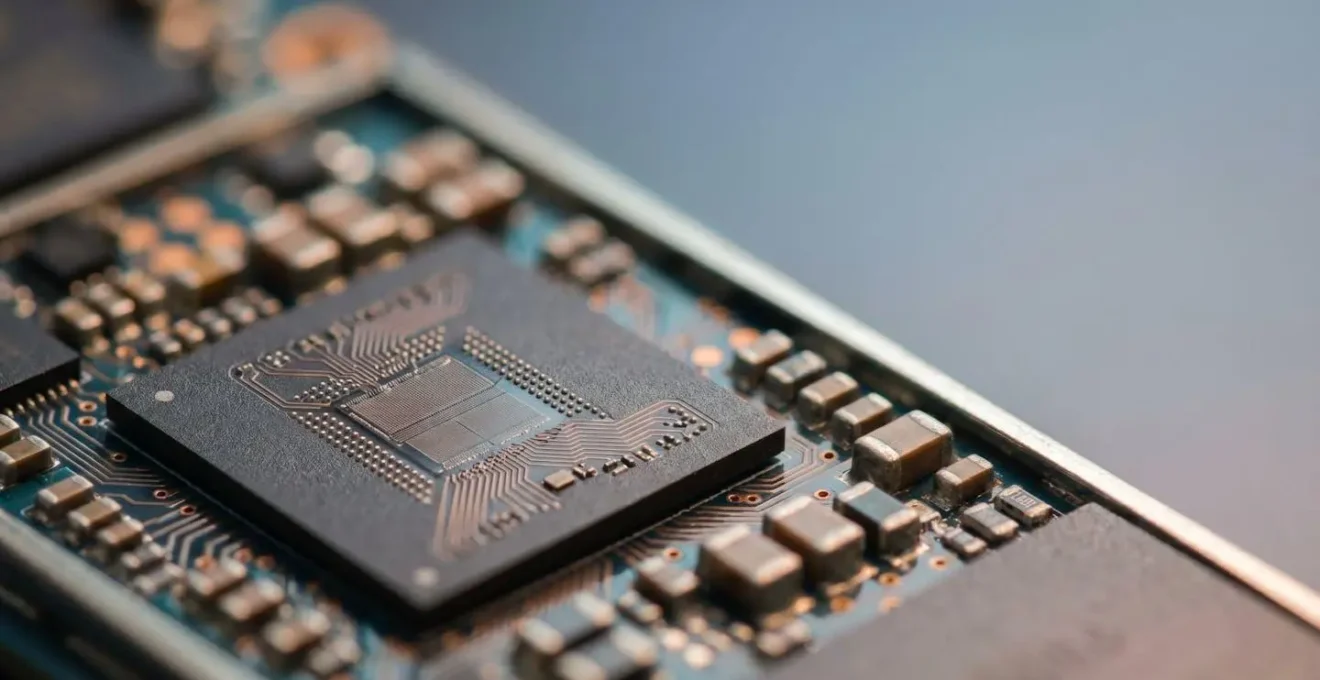
Unlike a PC, a smartphone’s processor isn’t a standalone component; it’s the core of a highly integrated System-on-Chip (SoC) that includes RAM, the GPU, and other critical functions. This permanent, soldered design is not a limitation but a deliberate engineering choice. It’s essential for achieving the compact size, high-speed performance, energy efficiency, and water resistance that define modern mobile devices. Attempting modularity would sacrifice these core benefits, resulting in a slower, bulkier, and less reliable phone.
If you’ve ever built or upgraded a gaming PC, you know the satisfaction of unboxing a new CPU, carefully dropping it into the socket, and securing the retention arm. It’s a rite of passage. So, when you look at the supercomputer in your pocket, a device exponentially more powerful than the machines that sent humanity to the moon, a natural question arises: why is it a sealed black box? Why can’t you upgrade the processor in your smartphone?
The common answer is simply “it’s soldered on,” but that’s a description, not an explanation. For a PC user accustomed to modularity, this feels like a deliberate limitation, perhaps even a form of planned obsolescence. The truth, however, is rooted in fundamental principles of electronic engineering and a series of intentional trade-offs. The very features you value most—speed, battery life, and a sleek, durable design—are a direct result of this integrated architecture. Upgrading your phone’s processor isn’t just difficult; it’s fundamentally incompatible with what a smartphone needs to be.
This article will deconstruct the engineering philosophy behind modern smartphone design. We will explore why components are fused together, how to predict a chip’s useful lifespan, and the stark choices between repairability and resilience. Ultimately, you’ll understand that the inability to upgrade is not a flaw, but a necessary consequence of pushing performance to its physical limits in a handheld device.
To navigate this complex topic, we’ve broken down the key engineering and consumer decisions you need to understand. Explore the sections below to get a complete picture of your device’s lifecycle.
Summary: Why Your Smartphone is a Sealed System
- Why Is the RAM Soldered Directly Onto the Processor?
- How to Predict if a Processor Will Still Be Fast in 4 Years?
- The Design Choice That Forces You to Scrap the Whole Phone
- Modular Repairability or Water Resistance: What Do You Lose?
- When to Sell Your Phone Before the Chipset Becomes Obsolete?
- When Is a £50 Battery Swap Better Than a £500 Upgrade?
- New Battery or New Phone: Which Has the Lower Carbon Cost?
- Buying Refurbished: Is It Really Better for the Planet?
Why Is the RAM Soldered Directly Onto the Processor?
The primary reason RAM is physically bonded to the processor in a smartphone is one of physics and performance: speed. In electronics, distance is the enemy of speed. The further an electrical signal has to travel, the more time it takes (propagation delay) and the more energy it consumes. To combat this, engineers use a technique called Package-on-Package (PoP), where the RAM chip is stacked directly on top of the processor chip.
This vertical integration is a marvel of miniaturization. Imagine a sprawling university campus versus a single, efficient skyscraper. The skyscraper (PoP) allows for much shorter and more direct pathways between floors (chips) than traveling across a large campus (a traditional motherboard). As a result, data can move between the CPU and RAM at incredible speeds, which is essential for the smooth operation of modern apps and operating systems. This design has a direct impact, as reduced signal propagation delay enables faster data access in high-speed applications like 5G and AI.
Case Study: Qualcomm Snapdragon with LPDDR5 RAM
A typical high-end smartphone implementation uses Package-on-Package (PoP) to combine a Qualcomm Snapdragon processor and its LPDDR5 RAM. The chips are placed just millimeters apart, connected by thousands of tiny solder balls. This allows data to travel between the processor and memory at significantly higher speeds than side-by-side placement on a larger board would permit. According to an analysis of PoP configurations, this not only boosts performance but also saves crucial board space, allowing for larger batteries or other components within the phone’s slim chassis.
A secondary, but equally important, benefit is space-saving. Every square millimeter inside a smartphone is precious real estate. By stacking components, engineers can create a smaller, more compact logic board, freeing up room for a larger battery, more advanced camera sensors, or a more robust cooling system. This quest for performance density—packing the most power into the smallest space—makes soldering RAM to the CPU a non-negotiable design choice.
How to Predict if a Processor Will Still Be Fast in 4 Years?
A processor’s raw power is only half of the performance equation. Its long-term speed and usability are ultimately determined by one critical factor: software support. A cutting-edge chip can be rendered slow and insecure if the manufacturer stops providing operating system (OS) and security updates. Therefore, the most reliable way to predict a processor’s longevity is to look at the manufacturer’s software update policy for that specific device series.
In the past, the Android ecosystem was notorious for fragmented and short-lived support. However, intense competition has forced major brands to make significant commitments, often promising multiple years of both major OS upgrades and security patches. As the technology analysis team at MacMyths notes, “Flagships from Google and Samsung benefit most, while upper-midrange devices typically receive four OS upgrades and five years of security patches.” This policy is the single best indicator of a phone’s useful lifespan.
| Manufacturer | OS Updates (Years) | Security Updates (Years) | Device Tier Coverage | Start Date |
|---|---|---|---|---|
| Google Pixel | 7 | 7 | Pixel 8 series and later | 2023 |
| Samsung Galaxy S/Z | 7 | 7 | S24 series, Z Fold/Flip 6 and later | 2024 |
| Samsung Galaxy A (Select) | 6 | 6 | A16, A26, A36, A56 and later | 2024 |
| Samsung Galaxy S21-S23 | 4 | 5 | Previous flagship models | 2021-2023 |
| OnePlus Flagship | 4 | 5 | 11, 12, 12R series | 2023 |
When evaluating a new phone, don’t just look at benchmark scores. Find the manufacturer’s official update promise for that model. A phone with a slightly less powerful processor but a 7-year update guarantee (like a Google Pixel 8 or Samsung Galaxy S24) is a much better long-term investment than a device with a marginally faster chip but only two years of promised updates. The former will remain secure and compatible with new apps for far longer, ensuring its performance feels “fast” for years to come.
The Design Choice That Forces You to Scrap the Whole Phone
The defining design choice that makes smartphones non-upgradable is the move from a motherboard with discrete components to a single, monolithic System-on-Chip (SoC). In a PC, the motherboard is a hub connecting separate, swappable parts: CPU, GPU, RAM, storage controller. In a smartphone, all of these functions—and more, like the image signal processor, AI accelerators, and 5G modem—are etched into a single piece of silicon.
This isn’t just about soldering parts onto a board; it’s about integrating their very functions at the microscopic level. The SoC is the phone’s brain, heart, and nervous system, all in one. This radical integration is the only way to achieve the required level of performance and energy efficiency within the tiny thermal and physical constraints of a handheld device. Research from the IEEE confirms that Package-on-Package (PoP) technology adoption addresses board space limitations, a critical factor in smartphone design.
As the illustration shows, the connections between these integrated functions are not simple wires but microscopic, high-speed data pathways. “Upgrading the processor” would be like trying to perform a brain transplant while keeping all the original neural connections intact—it’s a physical and logical impossibility. To change the CPU, you would have to change the entire SoC. And since the SoC is custom-designed and permanently soldered to a unique logic board, you are, in effect, replacing the entire core of the phone.
This is the fundamental trade-off: we have sacrificed the modularity of the PC for the extreme performance density of the SoC. While this prevents piecemeal upgrades, it’s also what allows your phone to shoot 8K video, run console-quality games, and last all day on a single charge, all without a cooling fan.
Modular Repairability or Water Resistance: What Do You Lose?
For years, the dream of a modular phone—a device with swappable components like a PC—has captivated tech enthusiasts. The premise is simple: want a better camera? Just snap in a new module. Processor too slow? Upgrade the CPU block. This concept was most famously attempted by Google’s Project Ara. Its failure serves as the ultimate lesson in the trade-offs between modularity and the realities of smartphone engineering.
The Cautionary Tale of Google’s Project Ara
Launched in 2013, Project Ara aimed to create the world’s first mass-produced modular smartphone. After developing several prototypes, the project was cancelled in 2016. The reasons for its failure are a perfect illustration of the modularity paradox. The modular design resulted in phones that were bulkier, heavier, and more expensive than integrated alternatives. The physical connections between modules created performance bottlenecks, as separating components slowed down communication and, as a Fortune analysis pointed out, also increased battery drain. Ultimately, the project proved that the dream of modularity directly conflicted with the user’s desire for a sleek, fast, and affordable device.
Beyond the performance and cost issues highlighted by Project Ara, modularity introduces another critical failure point: a lack of durability. Every seam, every connection point, and every removable panel is a potential entry point for dust and water. A key selling point for modern flagship phones is their high Ingress Protection (IP) rating, such as IP68, which guarantees a high level of water and dust resistance. This is only achievable through a sealed design, using strong adhesives and gaskets to create a unified, protected chassis.
So, what do you lose? The choice is stark. Pursuing modular repairability means you lose performance, increase size and cost, and completely sacrifice water resistance. For the vast majority of consumers who value a slim, durable phone that can survive an accidental drop in water, the integrated, sealed design is the clear winner. The market has spoken: resilience is valued more than repairability.
When to Sell Your Phone Before the Chipset Becomes Obsolete?
Since you can’t upgrade the processor, the smart consumer learns to manage the device’s lifecycle. A chipset doesn’t become “obsolete” overnight. Its value declines along a predictable curve tied directly to its software support. The optimal time to sell your phone is in the “sweet spot”: after you’ve extracted most of its value, but before its resale price plummets due to the end of security updates.
This “security cliff” is the most important date in your phone’s financial life. Once a device no longer receives security patches, it becomes a liability for tasks involving sensitive data, like banking or work email. This drastically reduces its appeal to savvy buyers on the secondhand market. As experts from UpTrade IT succinctly put it, “Software support is based on launch date and policy, not just the model name.” Therefore, you must think in terms of the support window, not just the phone’s age.
Selling your phone 6-12 months before the final security update is issued is the ideal strategy. At this point, the device is still fully functional and secure, often still receiving quarterly updates, which maintains a strong resale value. Waiting until the updates stop entirely means you’re competing with a flood of other users offloading the same model, causing prices to drop sharply.
Action Plan: Timing Your Phone Sale
- Identify Support Window: Find your phone’s launch date and the manufacturer’s official software support commitment for that model (e.g., a Galaxy S21 launched in 2021 with a 5-year policy will end support in 2026).
- Calculate the “Security Cliff”: Determine the exact year and approximate quarter when security updates will cease. This is your hard deadline.
- Set a Target Sale Window: Plan to list your phone for sale approximately 6 to 12 months before that final “cliff” date to maximize its market value.
- Monitor Update Frequency: Pay attention to when your device shifts from monthly to quarterly security updates. This is a clear signal that the end-of-life process is beginning and market value will start to decline more steeply.
- Frame Your Sale: When selling, highlight the remaining support window (e.g., “Still receives official security updates until late 2025”) to build buyer confidence and justify your price.
When Is a £50 Battery Swap Better Than a £500 Upgrade?
As your phone ages, its most noticeable decline will almost certainly be in battery life. Lithium-ion batteries have a finite number of charge cycles before they degrade. This often leads users to a crossroads: endure poor battery life, spend £50-£100 on a battery replacement, or spend over £500 on a brand-new phone? From an engineering and financial perspective, the answer is usually straightforward.
A battery swap is the superior choice if two conditions are met:
- The phone’s processor and software are still supported and meet your daily performance needs.
- The rest of the phone’s hardware (screen, cameras, ports) is in good working order.
If your phone isn’t lagging, crashing, or prevented from running essential apps, then the “problem” isn’t the phone—it’s just the battery. The battery is a consumable component, much like the tires on a car. You wouldn’t scrap a car with a perfectly good engine just because the tires are worn; you replace the tires. The same logic applies here.
Replacing the battery for a fraction of the cost of a new device can easily extend its useful life by another one to two years. This is the most economically rational and environmentally sound decision. The only time a full upgrade makes sense is when the core system—the SoC and its software support—has reached its end of life. If your apps are becoming incompatible, the OS is no longer updated, and the performance genuinely hinders your daily tasks, then and only then is the £500+ investment in a new device justified.
Thinking of the battery as a serviceable part, rather than an integral part of the phone’s identity, is a critical mental shift. It allows you to make a more logical, less emotional decision about your technology.
Key Takeaways
- System-on-Chip (SoC) integration is a deliberate design for performance, efficiency, and miniaturization, making upgrades impossible.
- A processor’s true longevity is defined by its manufacturer’s software update policy, not just its raw power.
- Repairing a wearable part like a battery is almost always the smarter financial and environmental choice, provided the core system is still supported and performs adequately.
New Battery or New Phone: Which Has the Lower Carbon Cost?
When considering an upgrade, the financial cost is obvious. The environmental cost, however, is often hidden. Every new smartphone carries a significant “embodied carbon” footprint—the total greenhouse gas emissions generated during the mining of raw materials, manufacturing of components, assembly, and shipping. This upfront environmental investment is, by far, the largest part of a phone’s total lifecycle impact.
The numbers are stark. Research published in The Ecologist highlights that up to 81% of a smartphone’s total carbon footprint is emitted during the production phase, before the device is even switched on for the first time. The years of use, charging, and data transfer account for a comparatively small fraction of its total environmental damage. This means the single most effective action a consumer can take to reduce their mobile tech footprint is to extend the life of their current device.
From this perspective, the choice between a new battery and a new phone is not a choice at all. The carbon cost of manufacturing and shipping a tiny replacement battery is negligible compared to the massive environmental cost of manufacturing a completely new smartphone. By opting for a battery replacement, you are maximizing the value of the huge amount of embodied carbon that was “spent” to create your phone in the first place.
Choosing to repair instead of replace directly reduces the global demand for new devices, which in turn reduces the need for energy-intensive mining and manufacturing. It’s a small, individual act with a measurable collective benefit. Before you decide your phone is “old,” consider that its biggest environmental impact has already happened. The greenest choice is to make that initial impact count for as long as possible.
Buying Refurbished: Is It Really Better for the Planet?
If your current phone is truly at the end of its life—unsupported by software and failing mechanically—the next best environmental choice is not to buy new, but to buy refurbished. The global impact of our new-phone habit is staggering. A 2020 analysis by researcher Mike Berners-Lee found that mobile phones created a global carbon footprint of 580 million tonnes of CO2-equivalent, representing about 1% of all worldwide emissions. The refurbished market is the most powerful tool we have to combat this trend.
Buying a refurbished phone is unequivocally better for the planet. It addresses the environmental problem from two directions. First, it extends the lifecycle of an existing device, ensuring the embodied carbon from its production is amortized over a longer period. Second, it reduces the demand for a new device to be manufactured, preventing an entirely new carbon footprint from being created. This creates a clear hierarchy for the environmentally conscious consumer:
- Best: Keep and repair your current phone.
- Second Best: Buy a high-quality refurbished phone.
- Acceptable Alternative: Buy a new phone from a brand focused on sustainability and repairability.
- Highest Impact: Buy a new mainstream flagship phone every 1-2 years.
A certified refurbished phone is not a “used” phone in the typical sense. It has been professionally inspected, repaired, cleaned, and often fitted with a new battery. It offers a like-new experience for a lower financial cost and a dramatically lower environmental cost. It is the perfect intersection of smart consumerism and responsible stewardship, proving that you don’t have to sacrifice quality to make a better choice for the planet.
By making informed decisions about when to repair, when to sell, and when to buy refurbished, you are taking control of your technology lifecycle. This approach not only saves you money but also contributes to a more sustainable and less wasteful electronics industry. Your next move should be to evaluate your current device against these principles to determine the smartest path forward.