
For a UK freelancer, a £1,000 flagship phone often has a lower Total Cost of Ownership (TCO) than a £300 budget model over a three-year period.
- Higher resale value on platforms like CEX can offset up to 50% of the initial investment, a value retention budget phones cannot match.
- Correctly applied UK tax deductions reduce the *real* cost of the device by 20-40%, depending on your income tax bracket.
Recommendation: Calculate your personal TCO by factoring in productivity loss, tax savings, and asset depreciation before making your next purchase.
As a self-employed professional in the UK, you face a familiar dilemma each September. A new wave of flagship smartphones hits the market, boasting incredible features and an equally incredible £1,000+ price tag. The immediate reaction is often one of fiscal prudence: “My current phone works fine,” or “A £300 device does the same job for a fraction of the cost.” Conventional wisdom suggests the expensive phone is a luxury, an unnecessary splurge when cash flow is king.
While it’s true you can claim a phone as a business expense, this argument often remains superficial. It fails to address the deeper financial implications of your choice. The decision isn’t merely about comparing two price tags; it’s about evaluating two different classes of business assets. One depreciates rapidly and introduces hidden costs, while the other retains value and enhances productivity in quantifiable ways.
But what if the common financial analysis is counter-intuitive? What if, by treating the phone as a strategic business asset and calculating its true Total Cost of Ownership (TCO), the £1,000 device is actually the more frugal and intelligent choice for a UK-based professional? The key isn’t the initial outlay, but the net cost to your business over its entire lifecycle, factoring in tax efficiency, asset depreciation, security liabilities, and productivity impact.
This article provides a comprehensive financial breakdown tailored for UK freelancers. We will dissect the key financial levers you must consider, moving beyond the sticker price to reveal the genuine return on investment. From the hidden “productivity tax” of cheaper devices to the specific mechanics of a Self-Assessment tax claim and the crucial role of resale value, you will gain a clear framework for making a strategically sound investment in your most-used business tool.
Summary: A Freelancer’s Guide to Smartphone ROI
- Why Buying Cheap Phones Costs You More After 2 Years?
- How to Deduct Your Smartphone Purchase on Your Self-Assessment Tax Return?
- iPhone Pro vs SE: Which Retains More Value at CEX After 3 Years?
- The Storage Error That Could Wipe Your Client Data on Budget Devices
- When in the Tax Year Should You Buy New Tech for Your Business?
- When Is a £50 Battery Swap Better Than a £500 Upgrade?
- How to Transfer Your App Subscriptions Without Paying Twice?
- How to Extend Your Phone’s Battery Lifespan Beyond 3 Years?
Why Buying Cheap Phones Costs You More After 2 Years?
The initial saving on a budget smartphone is seductive, but it often conceals long-term expenses that erode, and ultimately reverse, that initial benefit. For a freelancer, time is a direct correlate of revenue. Any friction, lag, or downtime caused by your primary business tool imposes a “productivity tax” on your earnings. This hidden cost is the first component of the Total Cost of Ownership (TCO) that must be quantified.
Consider the average UK freelancer’s earnings. A comprehensive report reveals the average day rate for UK freelancers is £379, which translates to roughly £47 per hour. If a slow, underpowered budget phone causes just 15 minutes of cumulative daily lag—waiting for apps to open, dealing with crashes, or restarting the device—it costs you over £11 per day. Over a 24-month period, this “productivity tax” amounts to more than £5,000 in lost billable time, dwarfing the initial £700 price difference between a budget and a flagship model.
Furthermore, the lifecycle of a budget phone is significantly shorter. They typically receive security and software updates for only 2-3 years, compared to 5-7 years for flagship devices from Apple or Google. For a UK freelancer handling client data, using a device that no longer receives security patches is a serious compliance liability under UK GDPR. The cost of a single data breach, both in potential fines and reputational damage, is a catastrophic risk that a low upfront price cannot justify. The true TCO must therefore account for purchase price, productivity loss, and risk exposure.
How to Deduct Your Smartphone Purchase on Your Self-Assessment Tax Return?
One of the most compelling arguments for investing in a high-quality smartphone is its tax-deductible status. However, simply “claiming it on tax” is a vague notion. For UK freelancers, understanding the precise mechanism is crucial to calculating the real, tax-adjusted cost of the device. The process involves determining business use, choosing the correct claim method, and accurately calculating the saving.
First, you must establish a defensible business-use percentage. HMRC requires you to separate business from personal use. The most robust method is to track your usage (calls, data, app time) for a representative month. If you find that 70% of your usage is for work, you can claim 70% of the phone’s cost and associated monthly contract fees. This percentage is your shield in the event of an HMRC inquiry.
Next, you choose the claiming method. For a phone costing under £1,000, you can claim the business-use portion as an “allowable expense” in the tax year of purchase. This is the simplest method. For items over £1,000, you would typically use Capital Allowances, allowing a 100% claim in the first year via the Annual Investment Allowance (AIA). The critical point is that the deduction reduces your taxable profit, not your tax bill directly. A £1,000 phone with 70% business use creates a £700 claimable expense. As detailed in current HMRC tax guidance for self-employed individuals, this translates to a real tax saving of £140 for a basic rate (20%) taxpayer or £280 for a higher rate (40%) taxpayer. When factoring in National Insurance savings, the benefit increases further, making the tax-adjusted cost of the phone significantly lower than its sticker price.
Finally, this expense is reported on your Self-Assessment tax return, typically under ‘Office costs’ or ‘Other business expenses’ on the SA103S or SA103F form. If you are VAT-registered (and not on the Flat Rate Scheme), you can also reclaim the business-use percentage of the VAT paid, further reducing the net cost.
iPhone Pro vs SE: Which Retains More Value at CEX After 3 Years?
A crucial, yet often overlooked, component of a smartphone’s Total Cost of Ownership is its depreciation. Like a car, a phone is a depreciating asset. The rate at which it loses value directly impacts how much it truly costs you over its lifespan. Flagship devices, particularly iPhones, exhibit a much flatter depreciation curve than their budget or Android counterparts, making them a more stable financial asset.
The UK’s second-hand market, dominated by retailers like CEX, provides a transparent measure of this depreciation. By analysing historical trade-in values, we can see a clear pattern: a premium device holds its value far more effectively. This retained value is equity you can cash in when you upgrade, significantly lowering the TCO of your initial purchase.
The following table, based on real-world UK market data, illustrates the stark difference in value retention between flagship and budget models. As the comparative analysis from CEX UK demonstrates, the initial higher cost of a Pro model is substantially mitigated by its strong resale value.
| Model & Launch Date | Launch Price (UK) | CEX Value 24 Months | CEX Value 36 Months | Total Depreciation |
|---|---|---|---|---|
| iPhone 12 Pro (256GB, Oct 2020) | £999 | £500-£550 (45% loss) | £400-£450 (55% loss) | 55% |
| iPhone SE 2nd Gen (128GB, Apr 2020) | £449 | £150-£180 (60% loss) | £100-£120 (73% loss) | 73% |
| Samsung Galaxy S21 (256GB, Jan 2021) | £869 | £280-£320 (63% loss) | £200-£240 (72% loss) | 72% |
| Note: Values based on CEX ‘Grade A’ condition. Including original box and accessories can add £20-£50 to trade-in value. Data compiled from CEX UK historical pricing and industry resale reports. | ||||
An iPhone Pro loses around 55% of its value in three years, whereas an iPhone SE or a comparable Samsung Galaxy flagship can lose over 70%. For a £999 iPhone Pro, this means you recover roughly £450 at trade-in. For a £449 iPhone SE, you recover only £120. The net cost of owning the Pro for three years (£549) is therefore not drastically higher than owning the SE (£329), especially when factoring in the superior performance and productivity gains. To ensure you achieve this maximum return, a strategic approach to device maintenance and selling is required.
Action Plan: Maximising Your Smartphone’s Resale Value
- Condition Maintenance: Use a quality case and screen protector from day one. CEX’s ‘Grade A’ classification, which requires a pristine device, can command 30-50% higher prices than scratched ‘Grade B’ models.
- Original Packaging: Retain the original box, charging cable, and any documentation. This can add £30-£70 to the trade-in offer for a flagship device, demonstrating care to the next buyer.
- Strategic Timing: Sell your device 1-2 months before the next model’s launch (typically in August for iPhones). This is when demand for the previous model peaks before the market is flooded with new upgrades.
- Platform Comparison: Check trade-in values across CEX, MusicMagpie, and Giffgaff simultaneously. Note that CEX often offers a 10-15% bonus if you take payment as a voucher instead of cash.
- Preparation for Sale: Before selling, remove your iCloud/Google account, perform a full factory reset, and ensure the phone is network-unlocked. Unlocked devices consistently fetch 15-25% higher prices in the UK market.
The Storage Error That Could Wipe Your Client Data on Budget Devices
Beyond performance and depreciation, a critical distinction between flagship and budget phones lies in the quality and longevity of their internal components, specifically the storage. Budget devices often use cheaper eMMC (embedded Multi-Media Card) storage, while flagships use faster and more durable UFS (Universal Flash Storage). This isn’t just about speed; it’s about reliability and data integrity—a non-negotiable for any professional handling client information.
eMMC storage is more susceptible to wear and degradation over time. As the storage cells endure read/write cycles, their reliability diminishes, increasing the risk of data corruption or outright failure. For a freelancer, a sudden storage failure doesn’t just mean losing personal photos; it could mean the irretrievable loss of client documents, project files, and critical communications—a catastrophic business failure.

This hardware risk is compounded by a software vulnerability. As a comprehensive guide on UK GDPR compliance highlights, using a device that no longer receives security updates can constitute a breach of your legal obligations as a data controller. If a budget phone is lost or stolen after its short 2-3 year update window has expired, you may be unable to prove to the Information Commissioner’s Office (ICO) that you took “appropriate security” measures to protect client data. This “Compliance Liability” could lead to significant fines and destroy client trust.
To mitigate these risks, a robust backup strategy is not optional; it is a fundamental business process. The industry-standard 3-2-1 rule provides a framework to ensure data survivability regardless of device failure, theft, or disaster.
Your Action Plan: The 3-2-1 Backup Strategy for Freelancers
- Three Copies: Maintain your primary working data on your phone, plus two separate backup copies. This redundancy protects against a single point of failure.
- Two Media Types: Store one backup on a cloud service (ensure it’s GDPR-compliant with UK/EU data residency, like pCloud or Microsoft 365) and the other on a physical, encrypted external drive.
- One Off-site Copy: At least one of your backups must be physically separate from your office. Your cloud backup satisfies this, protecting your data from local disasters like fire or theft.
- Automate and Verify: Leverage the automatic, encrypted backup features built into flagship operating systems (iCloud Backup for iPhone, Google One for Android). Crucially, perform a weekly manual check to ensure backups have completed and test a file restoration to confirm their integrity.
When in the Tax Year Should You Buy New Tech for Your Business?
For a UK freelancer, the timing of a significant purchase like a flagship smartphone is a strategic decision that can directly impact your cash flow and tax bill. The UK tax year runs from April 6th to April 5th of the following year. Understanding this calendar allows you to align your tech investments with your financial situation and optimise your tax efficiency.
There are two primary strategies, each with distinct cash flow implications. The first is a year-end purchase. Buying a new phone in March, just before the April 5th tax year end, allows you to claim the allowable expense against the current year’s profits. This is particularly advantageous if you’ve had a better-than-expected year and want to reduce your taxable income, thereby lowering the tax bill you’ll face the following January.
The second strategy is a start-of-year purchase. Buying in April or May, just after the new tax year begins on April 6th, means the expense will be claimed against the *next* tax year’s return. The tax saving is deferred, but this approach can be crucial for preserving cash flow, especially if you’ve just made a large tax payment in January and your reserves are low. As confirmed by HMRC’s official tax calendar for the self-employed, your Self-Assessment deadline is January 31st, making March and April key strategic months.
This decision should also be layered with market realities. New iPhones, for example, launch in September. Buying then gets you the latest technology and allows you to claim the expense in the current tax year. However, savvy freelancers often watch for March clearance sales. Retailers frequently discount the previous year’s flagship models just before the tax year ends, creating a powerful double-win: you secure a £100-£300 discount on a still-excellent device *and* get to claim the expense to reduce your imminent tax liability.
When Is a £50 Battery Swap Better Than a £500 Upgrade?
As your phone ages, degrading battery life becomes the most noticeable performance issue. The temptation is to jump to a full upgrade, but this isn’t always the most financially astute decision. A simple battery replacement can often extend the useful, productive life of your device for another 12-18 months for a fraction of the cost, but only if certain conditions are met.
The decision to repair versus replace hinges on one primary factor: software and security support. If your device is still receiving regular security patches from the manufacturer, it remains a viable and GDPR-compliant business tool. Flagship iPhones typically receive updates for 5-7 years, and high-end Androids for 4-5 years. If your phone is within this window, a battery replacement is a sound financial choice. If it has stopped receiving updates, an upgrade is mandatory to protect your business and your clients’ data.
The second factor is processor performance. If your core business apps (email, messaging, CRM) still run smoothly without significant lag, the underlying hardware is sufficient. In this case, the battery is the true bottleneck, and replacing it is a targeted, high-ROI fix. A £50-£70 battery replacement at a reputable independent UK repair shop can restore the device to its original stamina, effectively “buying” you another year of service for a minimal outlay.
This decision is best framed in terms of opportunity cost. The £450 you save by opting for a battery swap over a £500 mid-range upgrade is capital you can re-deploy elsewhere in your business. That £450 could cover an entire year’s subscription to your accounting software (like Xero or FreeAgent, typically £360-£432), or pay for your annual Professional Indemnity Insurance. From a strict ROI perspective, if the phone’s security and performance are still adequate, the battery swap delivers far greater value to your business.
How to Transfer Your App Subscriptions Without Paying Twice?
Migrating to a new smartphone involves more than just transferring contacts and photos. For a freelancer, it means migrating a suite of critical, subscription-based business tools. Mishandling this process can lead to service interruptions, lost data, or even paying for the same service twice. A smooth transition requires a pre-migration audit and an understanding of how different types of subscriptions are licensed.
The first step, performed a week before your new phone arrives, is a subscription audit. On your current device, go to your App Store or Play Store subscription settings and document every recurring payment. Crucially, note whether the subscription is billed directly through Apple/Google or if it’s a service you log into with a separate account (e.g., using a web login).
This distinction is key. Most major Software-as-a-Service (SaaS) platforms like Microsoft 365, Adobe Creative Cloud, Slack, and Xero use account-based licensing. Your subscription is tied to your email login, not your device or operating system. To transfer these, you simply download the app on your new phone (even if switching from iOS to Android) and sign in. The license transfers automatically.
The challenge lies with subscriptions billed directly via the App Store or Google Play. These are tied to your ecosystem account. If you are staying within the same ecosystem (iPhone to iPhone), they will transfer seamlessly when you sign in with your Apple ID. However, if you are switching between iOS and Android, you will need to manually manage the transition. The correct process is to cancel the subscription on the old platform the day before it renews, then immediately re-subscribe on the new platform to minimise downtime. For some independent apps, you may need to contact the developer directly to request a license transfer, a request most reputable developers will accommodate.
Key Takeaways
- The “Productivity Tax” from a slow, unreliable budget phone (lag, crashes, reboots) can cost a UK freelancer thousands in lost billable hours over two years.
- A £1,000 phone’s real cost to your business is closer to £600-£700 after correctly applying UK tax deductions for business use against your income.
- Flagship iPhones retain up to 30% more of their value on the UK resale market than budget or Android equivalents after three years, drastically lowering their Total Cost of Ownership.
How to Extend Your Phone’s Battery Lifespan Beyond 3 Years?
Once you’ve invested in a flagship device, treating it as the valuable business asset it is becomes paramount. The single most significant factor determining a phone’s useful lifespan is its battery health. By adopting a few science-backed charging habits, you can significantly slow down the chemical degradation of the lithium-ion battery, extending its peak performance well beyond the typical two-year mark and maximizing the return on your investment.
Heat is the primary enemy of a battery. Every time a battery is exposed to excessive heat, whether from fast charging, direct sunlight, or intensive use while plugged in, it suffers a small amount of permanent capacity loss. Your goal is to create a charging environment that minimises thermal stress. This means removing the case during fast-charging sessions to allow heat to dissipate and never leaving your phone on a car dashboard in the sun.
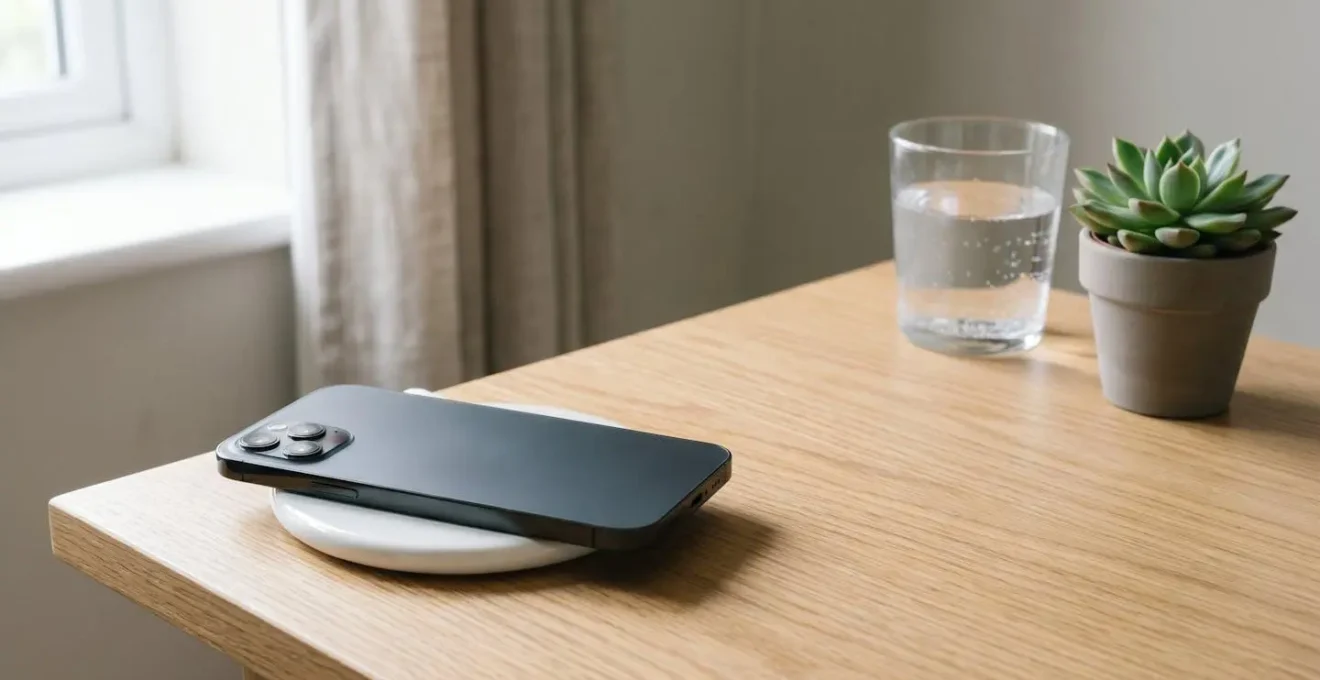
The second principle is to avoid the extremes of the charge cycle. Lithium-ion batteries are most stressed when held at 100% or fully depleted to 0%. The optimal range for daily use is to keep the battery between 20% and 80%. Modern operating systems make this easy. On an iPhone, enabling “Optimised Battery Charging” allows the device to learn your routine and hold the charge at 80% overnight, only topping up to 100% just before you wake up. Android’s “Adaptive Charging” performs a similar function. These are not gimmicks; they are crucial tools for long-term asset preservation.
Finally, you must deploy your chargers strategically. Use a slow, low-wattage (5W) charger for overnight charging. The slower charge generates significantly less heat, which is ideal for the long, unattended charging window. Reserve your powerful fast charger for what it’s designed for: quick, emergency top-ups during the workday when you need to get back to 50% charge before a client meeting. This two-charger protocol alone can extend your battery’s effective lifespan by an estimated 20-30%.
Before your next upgrade, move beyond the sticker price. Calculate the Total Cost of Ownership for your specific use case—factoring in the tax-adjusted cost, productivity impact, and resale value. This analytical approach will allow you to make a decision that benefits your business’s bottom line for years to come.